Event
EPPC 2026
Build what matters. Add AI where it pays. Scale it with control. This keynote is the business case for doubling down on Power Platform: preserved investments, agentic capability, lower lifecycle cost, and a European maker community already proving it in production.
The people who bet on Power Platform are quietly afraid AI just made their bet — and their craft — obsolete.
When anyone can vibe-code an app, “why the platform?” becomes the doubt nobody says out loud.
We confuse building a thing with owning it. What feels free to make is what bills you for years.
Creation is T0. Fast to build is not cheap to own.
Build fast with Copilot Studio. Make it last with Power Platform. The only agentic path that also governs the cost, the risk, and the maintenance — on one managed platform.
Speed and staying power on the same managed foundation. Microsoft owns the maintenance curve; what you already built carries forward.
You made the right bet. Now double down.
Reframe the platform from “a way to build apps” to “the economical, governed way to own agentic software at scale” — so the faithful are ahead, not behind.
Framework — Mark Pollard's “Four Points,” Sweathead.
Open on a story people can feel before asking them to buy a framework. Heathrow gives us a concrete European proof point: high stakes, operational scale, a maker journey, and Power Platform running in the real world.
A deeper customer film can establish the keynote's stakes: real work, real risk, real scale, and a maker-led solution that keeps delivering. The goal is not a glossy case study; it is a grounded bridge into the economics of building.
EPPC is not a generic enterprise audience. It is a builder audience, in Europe, at the end of a major community event. The structure should make them feel seen before it asks them to think about TCO, governance, and agentic strategy.
Last year said Power Apps is a vehicle for democratizing business innovation, and that apps still matter in the agent era. This year should not repeat that talk. It should build on it: if apps still matter, here is why the platform behind them matters economically, operationally, and ethically.
Before the answer, sit with the problem. Vibe-coded apps, custom agents, and raw-code shortcuts can look cheap at T0. The bill arrives later: maintenance, control, shadow IT, token sprawl, and security risk.
Blanket AI everywhere reads as ambition. It bills like a leak. Costs that start cheap grow with scale, and nobody set the throttle.
The old shadow IT was a rogue Excel file. The new one is local apps, built with code, calling endpoints nobody vetted — a clean path for data to walk out the door.
Everyone in the room can already turn AI on. The hard part — the part worth a keynote — is building in a way the organization can afford, maintain, secure, and evolve for years.
The Agent Academy deck proves the platform can make every app, workflow, and page agentic. EPPC needs the sharper business argument: don't optimize only for the first build. Optimize for the full life of the solution.
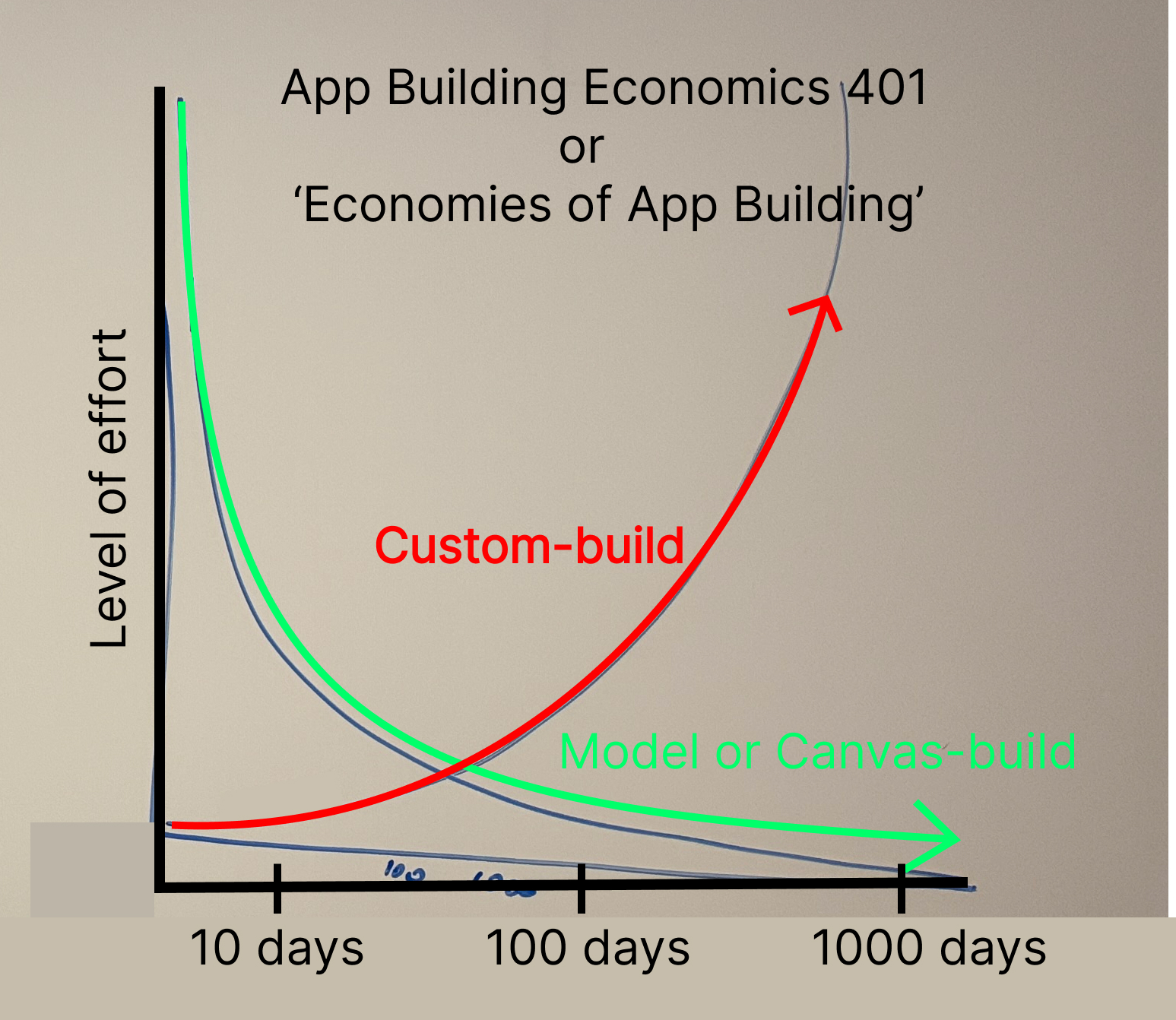
Custom build starts fast and cheap, then compounds as apps, dependencies, integrations, and agents multiply. Power Platform may ask for more discipline up front, but it flattens the lifecycle curve.
The crossover is the slide. Before it, a shortcut looks cheaper. After it — which is where every real organization lives — the managed platform is what keeps growth economically viable.
Total cost of ownership is cost multiplied by time across the operating life of the solution. Most decisions only price the first moment. Power Platform wins on the long arc.
One-time cost to stand the solution up. The phase everyone estimates.
Years of operation. Microsoft updates the backend. Many solutions need zero ongoing maintenance.
No chasing React or Vite vulnerabilities. The platform abstracts the framework churn away from you.
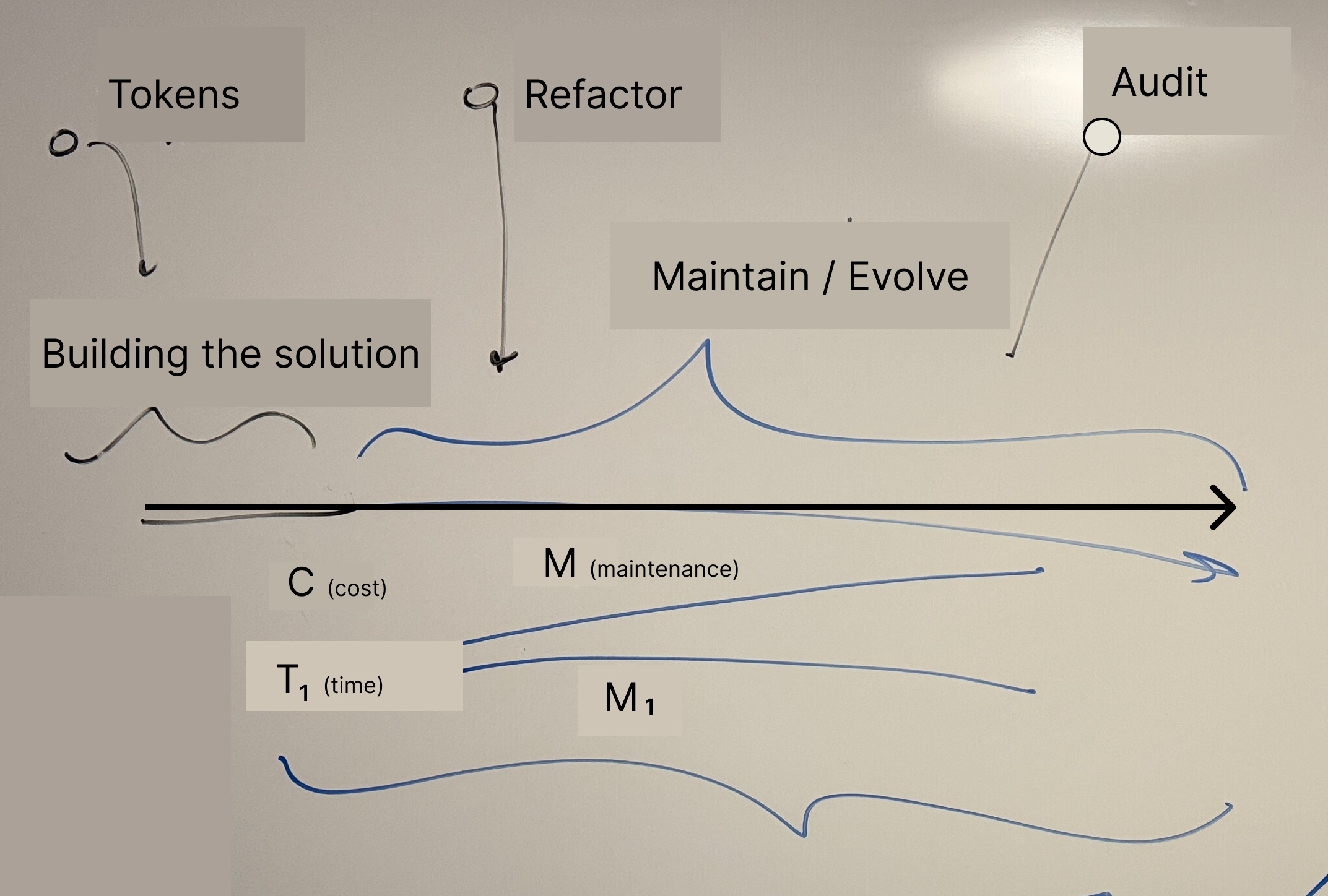
The differentiator is control over where the tokens go. Choose AI where it earns its cost. Use plain automation everywhere else. The design decision is no longer “add AI or not” — it's “AI here, deterministic there.”
Spend AI where language, ambiguity, or judgment earns the cost. Leave deterministic work deterministic.
Bring in an agent for a bounded improvement job, not as a permanent source of toil.
Use agents as focused reviewers when the lifecycle calls for scrutiny, traceability, or control.
They help the maker create the solution — generating apps, flows, logic, pages, schemas, and tests. The cost sits at design time, with a human watching.
They live inside the solution at consumption time, acting for the user in production. This is the spend that scales, so this is the one to supervise and govern.
Your existing Power Platform solutions don't get thrown away to go agentic. Configuration switches turn on in-app agents in what you've already shipped. The investment is preserved; the AI is additive.
This is where the Agent Academy flow comes back in. The platform gives makers a full toolset, brings agents into existing solutions, and keeps governance, security, operations, and availability in the managed layer.
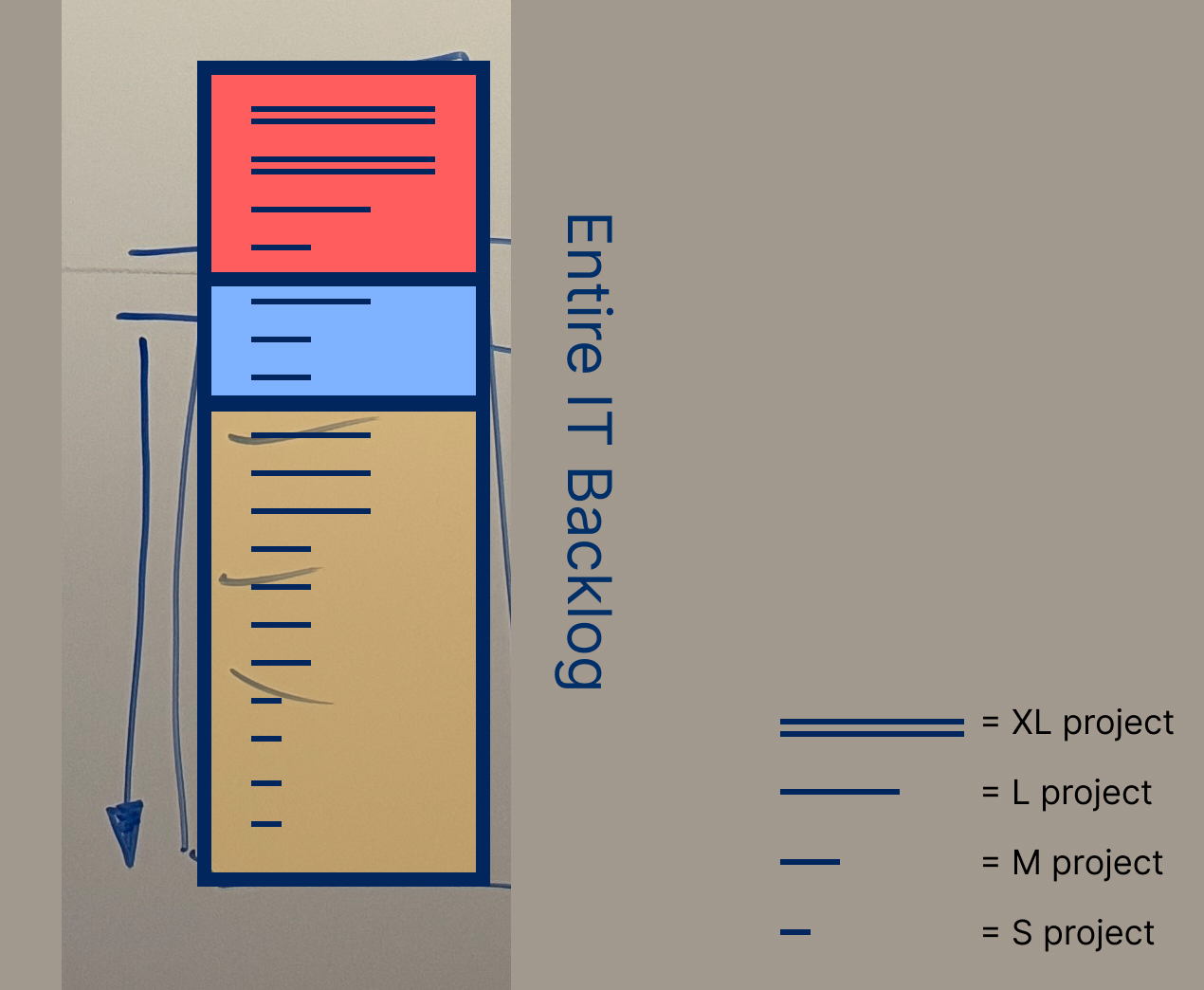
The fear in the room is that “everyone's a builder” means “fewer people.” Name it and flip it. The gain isn't fewer heads; it is the same people able to solve more business problems than the backlog ever allowed.
Monthly active makers worldwide — the base this strategy stands on.
Work that used to wait in a queue gets built by the people who need it.
Headcount holds. What each person can ship goes up — safely, on platform.
Land the talk on proof. Every demo shows multiple products working together toward one outcome — never a feature tour. Then close as the last keynote should close: with the European makers who already live it.
Roughly 35 minutes, mostly demos. No single-tool feature tours — each one starts from a business outcome and shows the products combining, because that's where the impact compounds. Build fast with Copilot Studio. Make it last with Power Platform.
A desktop flow automates an old system; the Canvas MCP builds the attended app from the flow itself, brand-aligned with Copilot and WorkIQ inside.
A modern model-driven app answers from your data, invokes an agent, drafts a Word or PowerPoint doc, and renders app fragments inside Copilot via the App MCP.
“Keeping it Real”: the Pages MCP builds the site from a spec, a security agent reviews quality, and a back-office app lets humans approve what ships.
GitHub Copilot joins a Canvas app as an agent — analyzing, refactoring, improving — with Claude Code side by side. Many humans, many agents, one app.
Power Apps with native mobile components, on the device where the work happens. Customer scenario still to be chosen.
A software business built on the platform. Leeds City Council replaced Remedy at enterprise scale — real workloads, not one-task apps.
A second ISV story to show a business built on the platform, if we can land it alongside Provance.
The human proof point for long-running impact, maker growth, and low-maintenance platform value.
Flies across Europe — eight to ten makers, each with a phrase, their scenario, and the impact. Telefónica (Spain) added to the lineup.